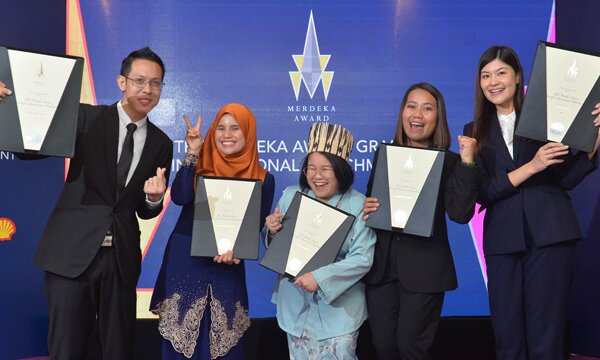
The recipient of the 2024 Merdeka Award for Health, Science and Technology, Johorian Dr Abu Bakar, born on Feb 4, 1944, was the first fully trained nephrologist to work in Ministry of the Health Ministry. Initially passionate about cardiology, a sudden twist of fate and the looming prospect of a transfer to Kuala Terengganu, if he pursued cardiology, led him to pivot to nephrology.
Upon returning from his overseas training, he plunged into his work with unwavering commitment. Despite his father's earlier suggestion to enter private practice and his uncle, Tun Dr Ismail, offering him the opportunity to take over his private clinic, Dr Abu Bakar chose to make his mark in the public sector.
Driven by a deep sense of purpose and a commitment to public service, he focused all his efforts on addressing a critical shortage of dialysis centres across Malaysia. This shortage left countless patients in precarious situations with slim chances of survival.
Navigating this challenge was fraught with obstacles, including significant funding issues. Undeterred, Dr Abu Bakar actively engaged in forums and interviews, tirelessly advocating for the expansion of dialysis services.
His youth sometimes meant that his proposals were not taken as seriously as they deserved. Yet, he remained steadfast in his pursuit of a breakthrough, recognising that while many supported his vision, others remained skeptical.
His perseverance bore fruit when BAKTI, under the leadership of Tun Dr Siti Hasmah Mohamad Ali, took a keen interest in his mission. BAKTI's initial funding was pivotal in launching the project.
Tasked with devising a detailed proposal for the funds, Abu Bakar outlined a plan to establish dialysis centres in six states. He meticulously visited each state to assess manpower and training needs, confronting the reality of inadequate facilities — one site had only a roof, while another was a repurposed car garage within a hospital compound.
Undeterred, he instructed his team of nurses and medical assistants to make the best of whatever spaces were available, demonstrating a pragmatic and resilient approach to overcoming the challenges they faced.
In the 1990s, Dr Abu Bakar introduced an innovative self-care model for dialysis patients, allowing them to manage their treatment with guidance provided via phone calls when necessary.
This approach was designed to alleviate the strain caused by the acute shortage of medical staff and expand the reach of dialysis services. As dialysis centres sprang up across the country, non-governmental organisations (NGOs) played a crucial role in establishing their own facilities. The Muar-born Dr Abu Bakar's initiative to train NGO staff facilitated the rapid growth of these centres.
With more organisations joining the effort, dialysis facilities proliferated at an accelerated pace. Throughout this process, he remained focused on finding solutions and driving progress, determined not to be hindered by the challenges that arose.
Receiving the Merdeka Award is a surprising honour for Dr Abu Bakar, especially since he had stepped away from government service over 23 years ago, after his tenure as the 8th director-general of health from 1991 to 1999.
Yet, the award fills him with pride and deep satisfaction. He's quick to acknowledge that this achievement is certainly not his alone; it has been the result of the unwavering support and efforts of his team — colleagues, nurses and medical staff — along with the crucial initial funding provided by BAKTI. Their collective contributions have been instrumental in realising his vision and making a lasting impact on Malaysian healthcare.