Fostering a Culture of Excellence

Dr Mohd Azri Ab Rani
In no other period in history has the topic of batteries been more popular than in the past year. However, the quest to produce low-cost batteries with excellent performance and high safety is a triple shot that continues to evade the best of minds.
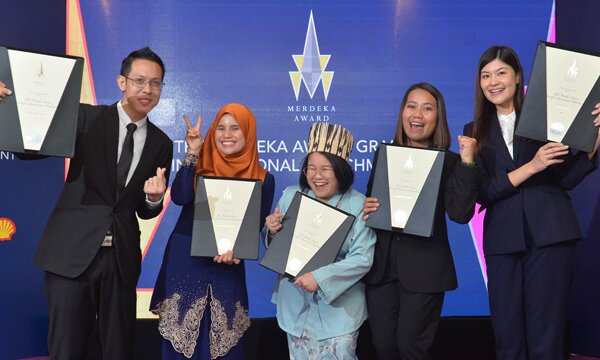
But I am optimistic that research collaboration is the way to make this a reality - where someday, sodium-ion (Na+ ion) batteries would be affordable, accessible and available to help address many of the world’s challenges. And the Merdeka Award Grant for International Attachment has taken me one step closer to materialising this dream.


As my interest in this field grew, I went under the tutelage of Prof Rika Hagiwara at Kyoto University, one of the world’s most renowned lead researchers for Na+ ion batteries. [Note: The sodium-ion battery belongs to the category of rechargeable batteries employing sodium ions (Na+) as their charge carriers. In comparison to lithium-ion batteries, sodium-ion batteries offer a relatively lower cost, improved safety features, and comparable power delivery characteristics. However, they do have a lower energy density.]
When first presented with the Grant, my intention was to be mentored by the “God of Batteries”, Prof. John B Goodenough Walker at the University of Texas. In the year that I secured the grant, Prof Goodenough was also conferred the Nobel Laureate in Chemistry and since every scientist in the field of batteries looked up to him, my email was in the long list of those looking to work under his supervision.
Therefore, I made the decision to change my attachment to a different research institute. Just as I was completing my attachment, the legendary Prof John B Goodengough passed away at the age of 100 years old.
The Massachusetts Institute of Technology (MIT), U.S.A was my next option. Just as I was accepted to be a visiting scholar, COVID-19 weighed in.
There was no better place to do this than at a world-class facility for advanced battery design, fabrication and testing located at the Battery Research and Innovation Hub, in Deakin University, Australia. This is where pilot-scale fabrication and the commercialisation of energy storage technologies are available on the University premises - making this one of the few places in the world where research output can be translated into real-life prototypes.
During my 2-month stint, I also met with many battery research scientists from all over the world - including those from Japan, China, the U.K, Spain and India - as more than 70 researchers work here on battery technology for future generations.
Mix and Match: The perfect formula
Tired of the chemical smell on weekdays, I joined a perfumery class on the weekend, with hopes for a “Bateri Wangi” in future?
The rugged outdoors of Australia