Fostering a Culture of Excellence

This may seem like science fiction to some of us, but the curiosity, passion and determination to transform an imagined idea into reality is what drives the ambitious researcher. And there are indeed many ambitious researchers here in Malaysia.
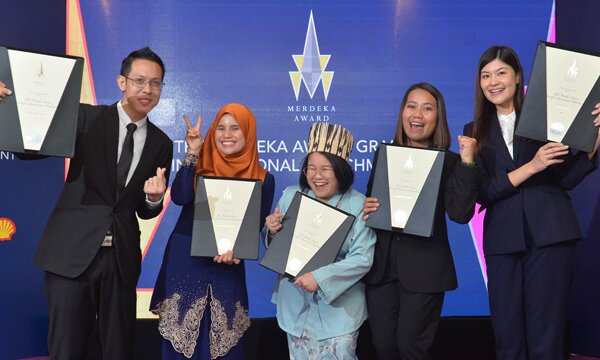
Undeterred by the restrictions brought about by the COVID-19 pandemic, more than a 140 of them from higher learning institutions and organizations nationwide submitted applications for the 2021 Merdeka Award Grant for International Attachment. All of them are below the age of 35, and already hard at work on their ideas.
The Grant enables deserving young Malaysians to build on their area of expertise or current research work, by undergoing an internship at an international institution of their choice.
The Merdeka Award Trust believes this creed of brilliant young minds will gain invaluable benefit from their attachment abroad, elevating the standards of their research and enabling them to transfer the know-how to lead Malaysia to become pioneers for sustainable solutions of the future.
In this article, we unveil the beguiling work of 12 applicants, and what they hope to achieve with their attachment abroad.


HUMAN HEALTH & WELL BEING

Early Detection of Diseases
Mohd Muzamir Mahat, a 35-year-old senior lecturer from Universiti Teknologi MARA, lost his mother to a disease that had advanced too far to treat. This experience drove his research into biosensors and their possible usage for the early detection of certain diseases in our body.
A bioelectronic material is a component of a compact device that measures specific molecules in our body to inform us about health and disease. It operates on a sample taken from the body or can be worn on the body for continuous measurement. The most well-known example is the glucose monitor.
As a material scientist and lecturer in the field of applied sciences, Mohd Muzamir is cognizant that the bio-electronic era is just around the corner. Thus his desire to build a wearable bioelectronics device to inform about the beginnings of a disease is timely.
However, the currently developed materials available for wearable bioelectronic technologies lack the stability required for his imagined purposes. His research has enabled him to formulate more stable Smart Functional Plastic Materials, but further investigation must be performed to extend its usability for humans. Through international collaboration with world-leading biomaterial scientists, he believes he will be able to fine-tune the properties of materials he invented. Moreover, he envisioned that technology could save more lives.
Jessica Ooi Sui Ying, 31 is another researcher working on early detection, but her research involves a more specific disease – ovarian cancer.
Ovarian cancer cells are problematic to detect at an early stage and present very mild or no symptoms at all. This is compounded by diagnostic methods that either require expensive instruments or are not specific enough, leading to misdiagnosis. Currently more than 50 percent of ovarian cancers are detected too late to respond well to treatment.
Jessica, a pharmacist and PhD candidate from University of Nottingham, Malaysia, wants to develop a device that will be portable, inexpensive and simple to use even in small clinics in rural settings; and can provide results rapidly, without the use of instruments or a laboratory. The paper-based results will be visible to the naked eye. The miRNA she proposes to detect, which causes proliferation of ovarian cancer cells, is part of a diagnostic model validated to have a 99 percent sensitivity and 100 percent specificity in detecting early-stage ovarian cancer.
The next step in her research involves successfully fabricating this nanosensor – which is what an international attachment would help her do. The nanosensor would be key for the successful rollout of population-based cancer screening programmes. The device can possibly be modified for the early detection of other cancers too.
Another researcher working on cancer is Hii Ling Wei.The 33-year-old is a cancer biologist, pharmacist and lecturer in the School of Pharmacy’s Department of Life Sciences, at the International Medical University.
During her attachment, Hii hopes to learn how to use single cell sequencing technology to explore how every cell in a breast cancer tumour will react to the drug treatment. The current treatment strategy for breast cancer is to focus on treating the size of the tumour, which often leaves behind a small amount of cancer cells which can become more aggressive and contribute to a lost battle against the disease.
Breast cancer currently is the most common cancer in Malaysian women, affecting one in every 30 individuals. While the incidence of cancer in Malaysia is not as high as countries like Australia (1 in 8), our survival rate is much lower (49% compared to 89% in Australia).
By breaking down the tumour to the single cell level, and testing how every cell in the tumour responds to different drugs, more accurate and targeted treatment can be administered. If successful, her study will have direct implications for more successful breast cancer treatment.
Poverty Alleviation
Researcher Punitha Sivanantham, 35, a lecturer at INTI International College, Subang has been helping families from the Program Perumahan Rakyat (PPR) flats find ways to uplift their livelihoods, since June 2018. Her visits to the PPR flats exposed her to what life is like for them – for an average family member of 5 persons per unit, the area per person is 130 square feet per person, some earning less than RM50 per day and malnourished mothers feeding babies with condensed milk. Often, the head of the household has to borrow money just to feed the family.
She hopes that through her attachment, she can bring back knowledge of best practices in social entrepreneurship from around the world and customize them for the Malaysian urban poor context. Ultimately, she hopes to generate a toolkit named as MyKomuniti for the Urban Poor and PPR communities to empower themselves through social innovation and social entrepreneurship, using their existing skills and talents, to break out of the cycle of poverty. She will then replicate this at other PPR flats.
Her work will be impactful to the bottom 20 urban poor - the poorest in urban society - from which there are currently no social entrepreneurs. Her vision is to rebrand the image of the PPR community in Malaysia by generating more social entrepreneurs among them by finding sustainable solutions for the societal issues around them.
FOR THE LOVE OF ANIMALS

TECHNOLOGY FOR BETTER SOCIETIES

RESEARCH FOR PRODUCTIVE AND SUSTAINABLE INDUSTRIES