Fostering a Culture of Excellence

My Say: Energy-fuelled destruction: A cautionary tale for Sabah’s energy crisis
By Chrishen Gomez / The Edge Malaysia

With the future of Sabah’s energy now in the hands of the state government, we can expect development plans that are more holistic, collaborative and consultative with the various stakeholders with vested interest (Photo by Zahid Izzani/The Edge)
This article first appeared in Forum, The Edge Malaysia Weekly on January 29, 2024 - February 4, 2024
Sabah, sixth in its gross domestic product share in Malaysia, is the only state that still implements energy rationing. The issue of energy supply has been its top priority for many decades but has seen little progress. The year 2024, however, is primed to be one of tremendous significance with the passing of a landmark bill that officially hands back control of energy to the state. This marks a tremendous victory for Chief Minister Datuk Seri Hajiji Noor, who can now enact the plans in his 17-year Sabah Energy Roadmap and Master Plan 2040 efficiently and unperturbed by federal bureaucracy.
A key feature that rings constant through the master plan is the underutilisation of renewable energy sources in the power generation mix. Sabah isn’t alone in recognising the potential of boundless energy waiting to be released from our most abundant resources — sunlight, flowing water, wind and heat trapped beneath the earth (geothermal). Indeed, the road map identifies all of these sources as short- to long-term strategies for transitioning the grid to a renewable one. Sabah, however, is always placed in the precarious position of balancing its plans for development with what many would argue is its most precious resource, its wild spaces.
In Borneo, which is one of the most biodiverse places on earth, Sabah is a jewel. Rainforests in Malaysia’s second largest state are so ancient that life within it has evolved to become completely unique to elsewhere in the world. It would not be a stretch to say that a single large forest block in Sabah could have more unique species than all of Peninsular Malaysia. As a result, at 53% of its total land mass, Sabah has among the highest levels of protection and permanent forest reserves in Malaysia. Holding up these figures in practice has added complex barriers for development that developers are eager to bypass. The potential for quick development in Sabah has often attracted actors who present their plans under the guise of unquestionably good-sounding fads. “Renewable” is one of these unquestionably good-sounding strategies that can have bad outcomes, and indeed it has.
In 2012, a project was granted to the then newly formed company, Tawau Green Energy Sdn Bhd (TGE) for setting up a geothermal power plant right in the heart of Tawau’s Class I permanent forest reserve and a totally protected state park. The project promised to provide 100mw on completion coupled with 269,026 metric tons of reduced CO2 emissions. Despite the ramifications to pristine wild habitat, the overarching good was seen as sufficient to cancel out the harms it would bring. Such were the merits of the project, so tantalising, that it acquired a federal government grant worth RM35 million and was given accreditation by the United Nations as a Clean Development Mechanism (CDM) activity.
What ensued in the years following was a destruction so thorough that its scars have not healed a decade on. Roads were cut and constructed right through to the very pinnacle of primary forest habitat, with arterial roads built every several hundred metres to support a peripheral but lucrative logging operation. Attempts to expose the damage resulting from this project were raised in the state assembly in 2014, but failed to garner significant traction. The project eventually reached an abrupt end in 2017 when TGE ceased operations for reasons unknown after just two years of exploratory drilling.
As a biologist working in the Tawau landscape in the years following, the perils of the project were stark to me. Where once stood trees thousands of years old, now lay barren clay for kilometres on end. Faunal diversity changed drastically as species that required a closed and intact forest canopy to survive disappeared. Ten years on since the drilling operations began, the only people to have benefited from this short-lived renewable energy project were the few who bagged profits from the sale of valuable logs. An ironic ending for a project that once commanded praise on a world stage for its progressiveness and positive impact on the environment.
This, however, need not be our fate. Alarm bells should have rung at the complete lack of transparency surrounding TGE. With the future of Sabah’s energy now in the hands of the state government, we can expect development plans that are more holistic, collaborative and consultative with the various stakeholders with vested interest. Collaborating with scientists has always been a legacy and strength of the Sabah state government. Scientists from across the globe have devoted decades of work to understanding Sabah’s unique landscape which can now be leveraged by state policymakers to take informed and measured action.


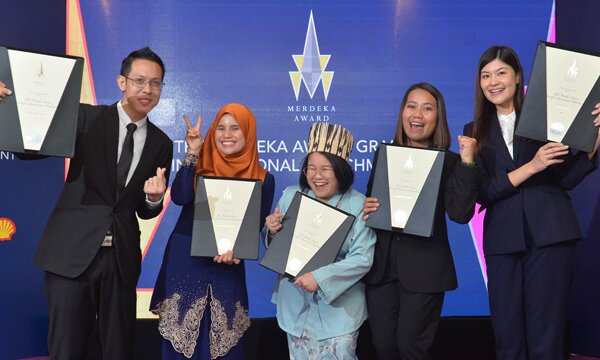
Chrishen Gomez is a DPhil candidate and wildlife biologist at the Wildlife Conservation and Research Unit (WildCRU) at Oxford University. His research focuses on the Sunda clouded leopards of Borneo as a model for understanding biodiversity. He was the recipient of the Merdeka Award Grant for International attachment and a National Geographic Explorer.