Fostering a Culture of Excellence

Amaziasizamoria Jumail
What do the flora and fauna in Mexico and Malaysia have in common? A lot.
Both countries are also party to the Global South Cooperation, also known as South-South Cooperation. This is a collaboration among developing countries primarily located in the Southern hemisphere which focuses on promoting sustainable development and mutual growth, through sharing in three areas: technical cooperation (sharing expertise in areas like agriculture, health, education, and climate change), economic collaboration (enhancing trade and investment opportunities) and cultural exchange and understanding.
Given the myriad similarities of countries in this Cooperation, researchers focussing on the environment can share knowledge and leverage on each others’ experiences.
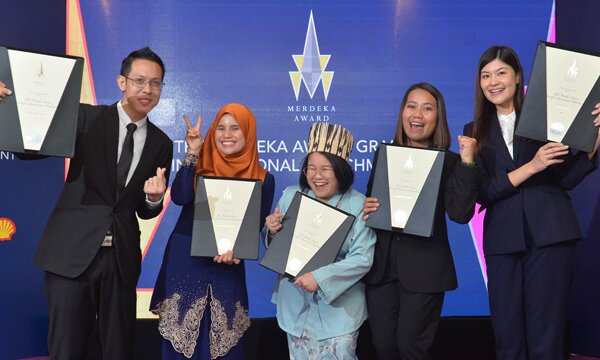
As such, as part of the Merdeka Award Grant for International Attachment, I chose to work with the research teams in two institutions in Mexico: Centro de Investigación en Biodiversidad y Conservación (CIByC) of the Universidad Autónoma del Estado de Morelos. The latter served as my host institution where I worked with Dr. Cristina Martinez Garza, a restoration ecologist, and the Instituto de Ecología, A.C.
My goal was to immerse myself in Mexico’s diverse ecosystems, as well as to explore, learn and share information about tropical forest restoration ecology within the context of the Global South, with a specific emphasis on methods that could be applied to the Regrow Borneo project in Malaysia where I currently work. I also had the opportunity to share the vision and progress of the Regrow Borneo project with esteemed colleagues at CIByC and INECOL which was particularly rewarding. The discussions not only highlighted our project's unique challenges and achievements but also facilitated a rich exchange of ideas.



The knowledge and experiences I gained during my attachment in Mexico have shaped my perspective on my ongoing research and future projects.