Fostering a Culture of Excellence

Article From SAYS
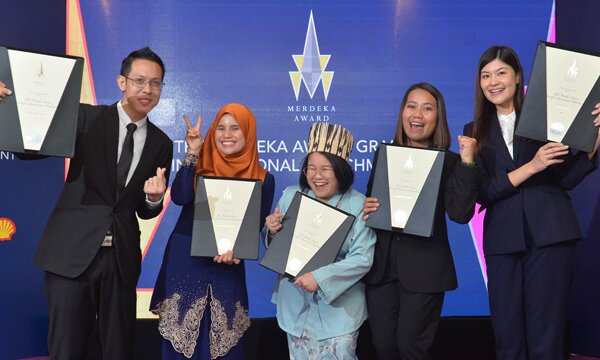
They were handpicked from over 200 applicants.


The grant, now in its 10th edition, is all about helping young Malaysians aged 22 to 35 gain international experience to level up their research and leadership skills.
This year, the Merdeka Award Trust received over 200 applications, a record-breaking figure that reflects how ambitious and driven Malaysian youth are today.
Here's a look at 2025's recipients and their innovative research:
1. Dinesh Sangarran Ramachandram

Lecturer (School of Pharmacy) | Monash University Malaysia
Dinesh is working on improving dementia care in Malaysia by creating culturally sensitive education and practical medication tools.
"This work is deeply personal. I've walked alongside my own family through the challenges of dementia. It made me realise how isolating and overwhelming it can be, especially when it comes to understanding the condition and managing medications safely."
He is developing a Dementia Literacy & Medication Toolkit designed for Malaysian families and caregivers, using simple language and visual aids.
"It breaks down complex topics like early signs and medication safety using simple language, visual aids, and culturally familiar examples. We're reimagining how dementia and medication safety is taught, moving beyond textbooks into simulations, patient stories, and tech-based learning," he said.
2. Dr Rasyidah Rehir

Trainee Medical Lecturer, Faculty of Medicine | Universiti Kebangsaan Malaysia (UKM)
Dr Rasyidah is on a mission to revolutionise medical training in Malaysia by developing advanced cadaver (deceased body) preservation techniques and setting up a nationwide body donation programme.
"Cadavers give students a real-life understanding of the human body that no model or screen can replace. They help build the crucial tactile skills needed in clinical practice," she said, explaining that current cadaver access is limited, which means many students and budding surgeons miss out on essential hands-on learning.
Her work will introduce the Thiel embalming method, which preserves bodies in a lifelike state, making them ideal for surgical training. This project also focuses on building Malaysia's first state-of-the-art Human Cadaveric Centre and promoting ethical body donation across the country.
"Better-trained doctors and surgeons mean safer procedures and improved patient outcomes," she added.
3. Calvin Shee Yin Ming

Founder and President | United For Global Antimicrobial Stewardship (UGAS)
Currently a student at Universiti Malaya, Calvin is exploring using Malaysia's own carnivorous pitcher plant microbiomes to discover natural compounds for new antibiotics.
"We are now looking into the enzymes (of bacteria and fungi within pitcher plants) to study their functions. Interestingly, some of these enzymes might also have antimicrobial properties, serving to protect the plant from harmful pathogens introduced by prey."
Through an international research stint at France's National Centre for Scientific Research (CNRS), Calvin will apply cutting-edge functional metagenomics to decode the genetic blueprint of microbes inside pitcher plants.
"By studying these microbes, we not only get to discover new tools for biotechnology and medicine, but also showcase how Malaysia's rich natural heritage holds solutions to global challenges like antimicrobial resistance," he added
4. Keisheni Ganeson

PhD Researcher | Universiti Malaysia Terengganu (UMT)
As part of her PhD research, Keisheni is designing smart microneedles powered by butterfly pea flower nanoparticles to revolutionise wound care.
"Microneedles are tiny needles on a small patch that can deliver medicine through the skin. They painlessly deliver medication directly into the skin around the wound, targeting infection or promoting healing.
"At the same time, the butterfly pea nanoparticles in the patch respond to changes in the wound's pH. If there's an infection, the pH shifts, and the patch changes colour, giving a visible signal to the user or caregiver," she said, explaining the use of the common butterfly pea flower as a natural pH sensor and its unique colour changing abilities.
Keisheni believes that using locally available natural ingredients will make the patch cheaper and easier to produce, making it also more accessible for rural or disaster-prone areas where access to healthcare is limited.
"The biosensor part is completely new to me, which is why this attachment is so important. It's my chance to learn from experts and advance the design," she added.
5. Nur Hafizah Annezah Utuh

PhD Researcher | Hospital Pakar Universiti Sains Malaysia (USM)
Nur Hafizah is working on DNA-guided heart medication to make treatments safer and more effective for Malaysian patients.
"About 4 in 10 Malaysians don't respond well to a common heart drug called clopidogrel, and most don't even know it. If we can identify patients who don't respond to clopidogrel through a simple genetic test, we can switch them to alternative treatments that are more effective for them," she said.
Her study is testing a CYP2C19 genotype-guided approach that matches heart patients to the right medication after a heart attack or stent procedure. This could prevent life-threatening complications, cut unnecessary costs, and help Malaysia move toward personalised medicine.
"In standard treatment, doctors usually give the same drug to everyone. But this is a more personalised way of treating patients, especially those with heart problems," she said.
Upon receiving the Grant, these five Malaysians will be heading to top international institutions for short-term attachments of up to three months
During these attachments, they will sharpen their work and bring their solutions back home.
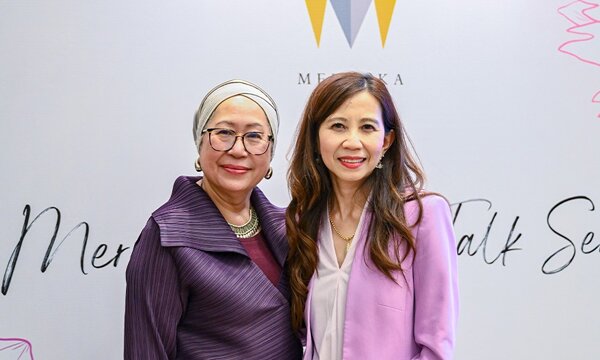
Tan Sri Tengku Muhammad Taufik, President and Group CEO of PETRONAS, and member of the Board of Trustees, Merdeka Award Trust, said the Merdeka Award Grant for International Attachment is meant to recognise young Malaysians with the vision and resolve to pursue greatness in their own fields.
"Past recipients of the Grant have gone on to create lasting impact for Malaysia through their work in education, healthcare, science and technology. As these five outstanding recipients join the illustrious roster, we look forward to the game-changing solutions that they have conceived and will soon refine and bring to fruition for the benefit of all Malaysians," he added.
Find out more about the Grant on Merdeka Award Trust's website today https://www.merdekaaward.my/